Arrhythmia Management
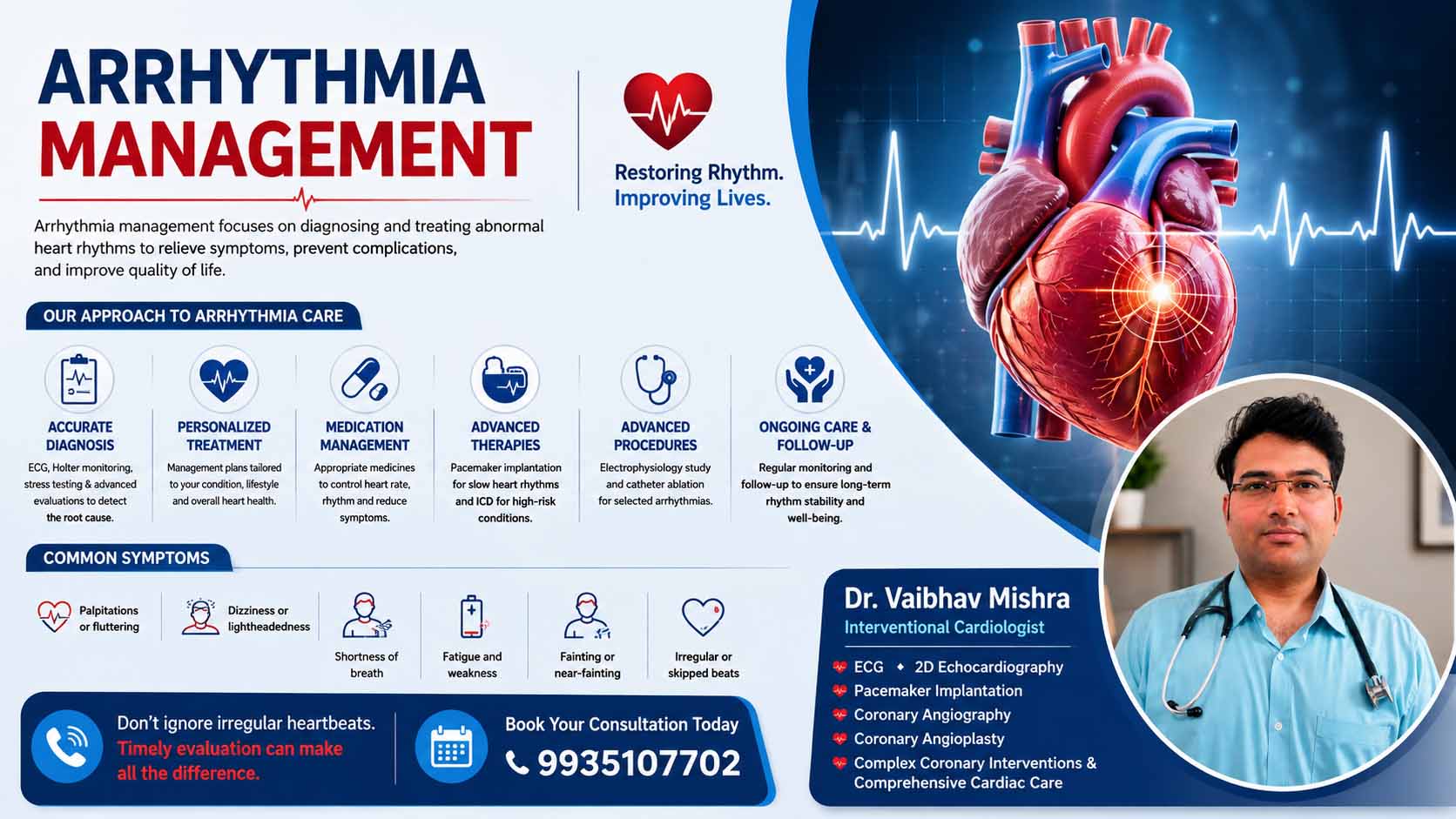
Arrhythmia management focuses on identifying and treating abnormal heart rhythms that may cause the heart to beat too fast, too slowly, or irregularly. Some arrhythmias may be harmless and require only monitoring, while others can cause significant symptoms or increase the risk of complications such as stroke or heart failure.
Dr. Vaibhav Mishra, Interventional Cardiologist in Varanasi, provides comprehensive evaluation and management of patients experiencing palpitations, irregular heartbeat, dizziness, fainting, and other symptoms that may be associated with cardiac rhythm disorders.
What Is Arrhythmia?
An arrhythmia is a problem with the rate or rhythm of the heartbeat. The heart's electrical system controls each heartbeat, and an abnormal electrical signal can cause the heart to beat too quickly, too slowly, or irregularly.
Common types of arrhythmias include:
- Atrial Fibrillation (AFib)
- Atrial Flutter
- Tachycardia
- Bradycardia
- Premature Heartbeats
- Conduction Disorders
- Other Abnormal Heart Rhythms
Symptoms of Arrhythmia
Some arrhythmias may cause no noticeable symptoms, while others can significantly affect how a person feels and functions. Common symptoms include:
- Fast or irregular heartbeat
- Palpitations or fluttering sensation
- Feeling that the heart is skipping a beat
- Dizziness or lightheadedness
- Unexplained fatigue or weakness
- Shortness of breath
- Chest discomfort
- Fainting or near-fainting episodes
The type and severity of symptoms can vary depending on the underlying rhythm disorder.
Arrhythmia Diagnosis
Accurate diagnosis is an important first step before deciding on treatment. Depending on the symptoms and suspected rhythm abnormality, evaluation may include:
- ECG/EKG
- Holter monitoring
- Extended cardiac rhythm monitoring
- Exercise stress testing
- Blood tests when clinically indicated
- Echocardiography
- Other specialized cardiac investigations when required
An ECG records the heart's electrical activity and can help identify many rhythm abnormalities. When symptoms occur intermittently, ambulatory monitoring such as a Holter monitor may help capture abnormal rhythms that are not present during a routine ECG.
Personalized Arrhythmia Treatment
Treatment depends on the type of arrhythmia, symptoms, underlying heart condition, and the patient's overall risk.
Depending on the individual situation, treatment may include:
Medications
Medicines may be used to control heart rate or rhythm. In certain patients with atrial fibrillation, medications may also be prescribed to reduce the risk of blood clots and stroke.
Lifestyle & Risk-Factor Management
Managing blood pressure, cholesterol, body weight, tobacco exposure, physical activity, and other cardiovascular risk factors can form an important part of arrhythmia care.
Pacemaker Therapy
Selected patients with clinically significant slow heart rhythms or conduction problems may benefit from pacemaker implantation to help maintain an appropriate heart rate.
Other Procedures
Depending on the specific arrhythmia, selected patients may require procedures such as electrical cardioversion, catheter ablation, or an implantable cardioverter-defibrillator (ICD).
Atrial Fibrillation and Stroke Prevention
Atrial fibrillation is an important type of arrhythmia because it can increase the risk of blood clots and stroke. Management may therefore involve both heart-rate/rhythm management and assessment of the patient's stroke risk. Appropriate patients may require anticoagulant medication.
Treatment decisions are individualized based on factors such as age, medical history, other cardiovascular conditions, and bleeding risk.
Living With an Arrhythmia
Patients diagnosed with an arrhythmia should follow their prescribed treatment plan and attend recommended follow-up appointments.
Helpful measures may include:
- Taking prescribed medicines regularly
- Monitoring symptoms and pulse when advised
- Controlling blood pressure and cholesterol
- Maintaining a healthy weight
- Following a heart-healthy diet
- Avoiding tobacco
- Staying physically active according to medical advice
- Informing your doctor about all medications and supplements you take
Never stop or change prescription cardiac medication without discussing it with your healthcare professional.
Arrhythmia Management in Varanasi
Dr. Vaibhav Mishra, Interventional Cardiologist in Varanasi, provides comprehensive cardiac evaluation for patients with suspected or diagnosed rhythm disorders.
His clinical expertise includes ECG, 2D echocardiography, pacemaker implantation, temporary pacemaker procedures, coronary angiography, coronary angioplasty, and comprehensive cardiac care.
His approach focuses on identifying the underlying rhythm problem, evaluating associated cardiovascular conditions, and developing an appropriate treatment plan according to each patient's individual needs.
When Should You Consult a Cardiologist?
You should consider cardiac evaluation if you experience recurrent:
- Palpitations
- Irregular or unusually fast heartbeat
- Dizziness
- Fainting or near-fainting
- Unexplained fatigue
- Breathlessness
- Reduced exercise tolerance
- Chest discomfort
If palpitations occur together with chest pain, significant shortness of breath, severe dizziness, or fainting, urgent medical evaluation is important.
Take the Next Step Towards Better Heart Rhythm Care
Early evaluation can help identify the type and cause of an abnormal heart rhythm and determine whether monitoring, medication, a device, or another treatment is appropriate.
Disclaimer: This content is intended for general health education and does not replace professional medical diagnosis or treatment. Arrhythmia treatment varies from patient to patient and should be determined by a qualified cardiologist after appropriate evaluation.