
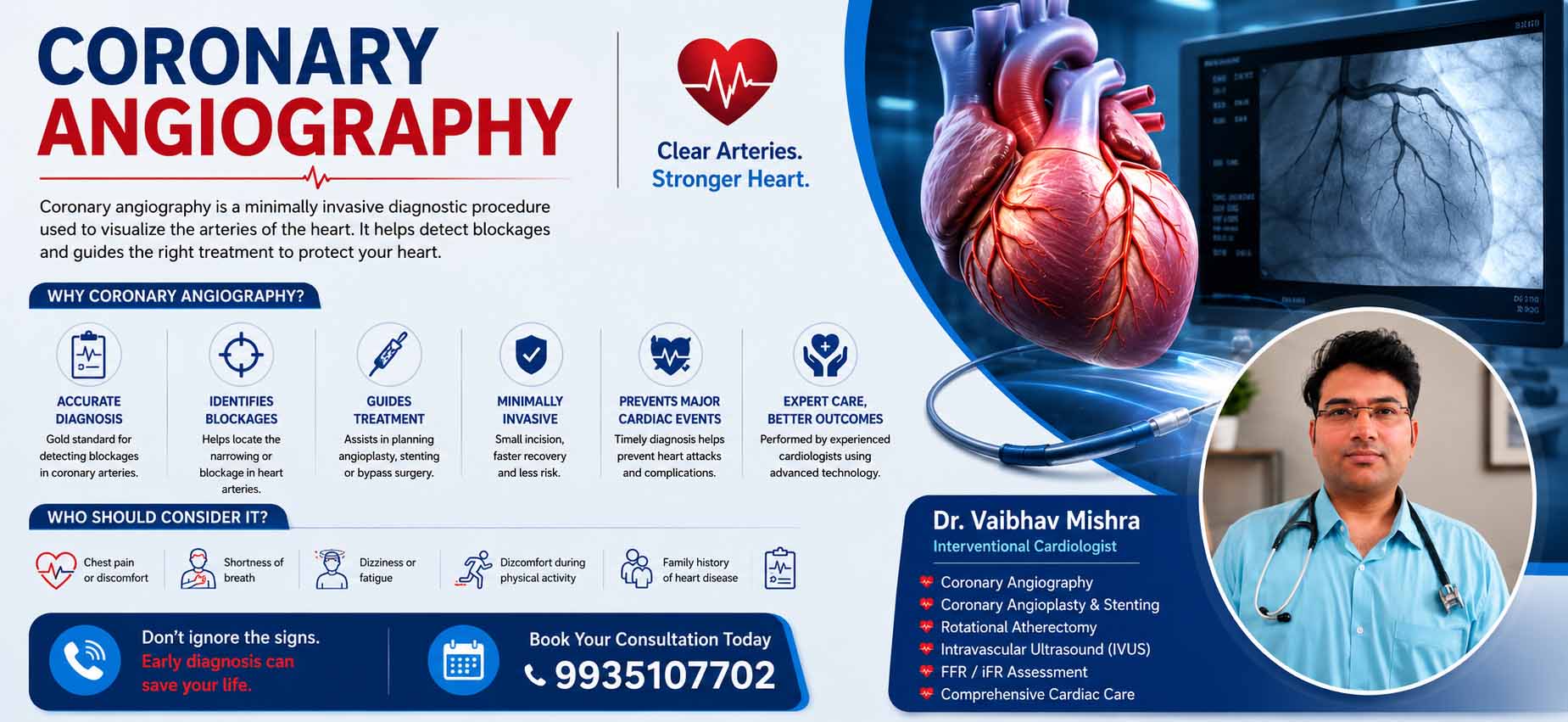
Coronary Angiography
Coronary angiography is an advanced diagnostic procedure used to examine the blood vessels supplying the heart and identify narrowing or blockages in the coronary arteries. It plays an important role in evaluating patients with chest pain, suspected coronary artery disease, abnormal cardiac test results, or other symptoms that may indicate reduced blood flow to the heart.
What Is Coronary Angiography?
During coronary angiography, a thin flexible catheter is carefully guided through an artery, commonly from the wrist or groin, toward the heart. A special contrast dye is then introduced into the coronary arteries, allowing the cardiologist to visualize the blood vessels using X-ray imaging.
The procedure helps determine the location, severity, and pattern of coronary artery blockages and assists the cardiologist in deciding the most appropriate treatment.
When Is Coronary Angiography Recommended?
A cardiologist may recommend coronary angiography when a patient has:
- Persistent or recurrent chest pain
- Suspected coronary artery disease
- Abnormal ECG, stress test, or other cardiac investigations
- Symptoms suggestive of reduced blood flow to the heart
- A suspected or confirmed heart attack
- Known coronary artery disease requiring further evaluation
- Complex coronary disease requiring detailed assessment
How Is the Procedure Performed?
Before the procedure, the patient's medical history, medications, allergies, kidney function, and other relevant factors are assessed.
During the procedure:
- Local anaesthesia is administered at the catheter insertion site.
- A thin catheter is introduced through an artery, usually in the wrist or groin.
- The catheter is guided toward the heart using imaging.
- Contrast dye is injected into the coronary arteries.
- X-ray images are taken to visualize blood flow and identify blockages.
- The cardiologist evaluates the findings and determines the appropriate treatment strategy.
In selected patients, angiography may be followed by an interventional procedure such as coronary angioplasty and stent placement, if clinically appropriate.
Benefits of Coronary Angiography
Coronary angiography provides detailed information about the coronary arteries and can help:
- Detect coronary artery blockages
- Identify the location and severity of narrowing
- Evaluate complex coronary artery disease
- Guide decisions regarding angioplasty or bypass surgery
- Support timely treatment planning
- Assess coronary arteries during certain cardiac emergencies
Is Coronary Angiography Safe?
Coronary angiography is a commonly performed cardiac procedure. However, like any invasive procedure, it can have potential risks, including bleeding or bruising at the catheter site, blood-vessel complications, allergic reactions to contrast dye, kidney-related complications, and other rare complications.
Your cardiologist will evaluate your individual health condition and explain the potential benefits and risks before the procedure.
Expert Coronary Angiography in Varanasi
Dr. Vaibhav Mishra, Interventional Cardiologist in Varanasi, provides comprehensive evaluation and management of coronary artery disease. With advanced training in cardiology and extensive experience in coronary interventions, he focuses on accurate diagnosis and individualized treatment planning.
His expertise includes coronary angiography, coronary angioplasty, complex coronary interventions, CTO procedures, bifurcation interventions, and pacemaker implantation.
Take the Right Step for Your Heart Health
If you are experiencing recurrent chest discomfort, breathlessness, or other symptoms suggestive of heart disease, timely cardiac evaluation can help identify potential problems and determine the appropriate treatment.