Hypertension Management
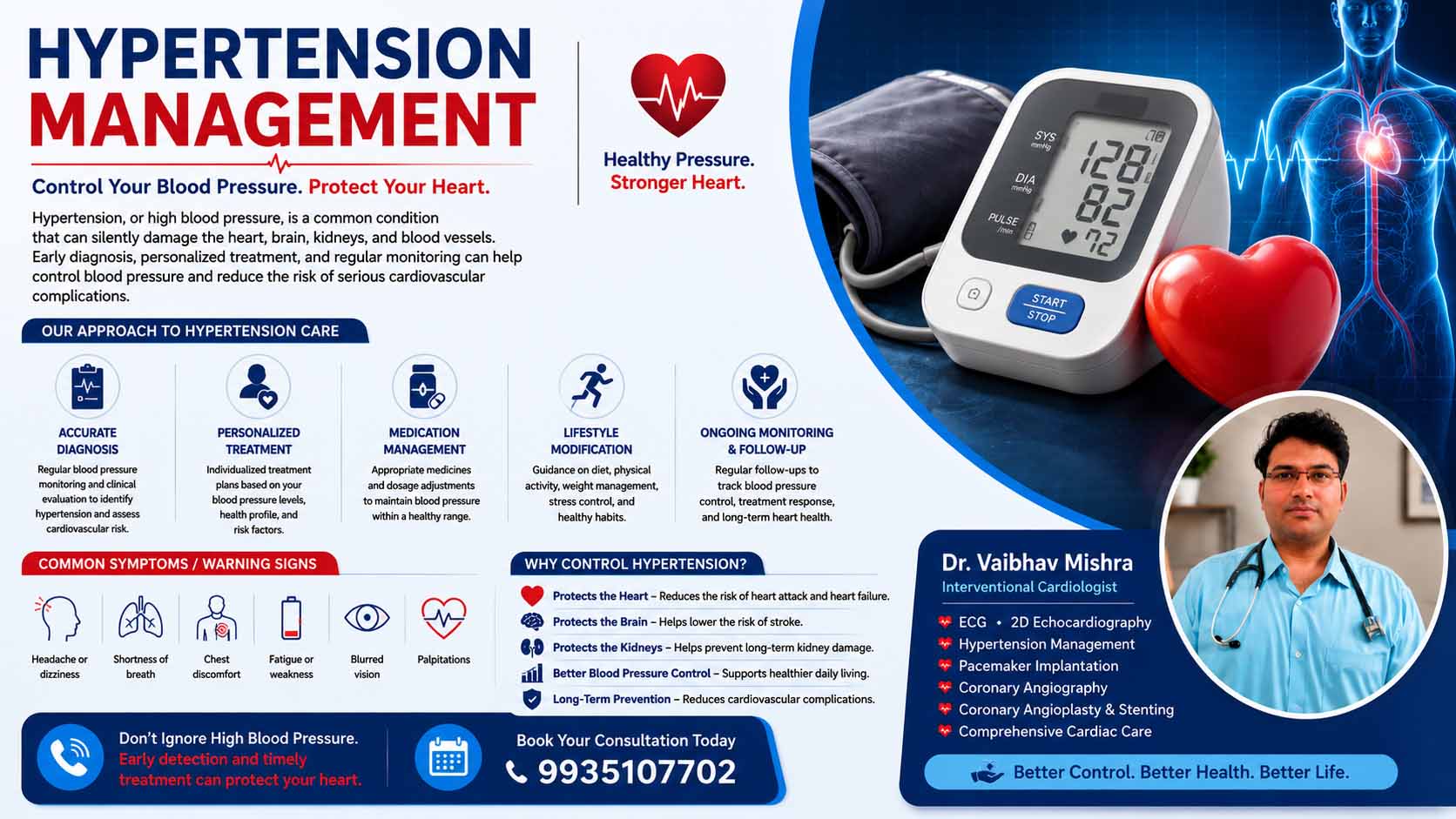
Hypertension, or high blood pressure, is one of the most important risk factors for heart disease and stroke. Because it often causes no obvious symptoms, regular blood pressure monitoring and timely medical evaluation are essential. Long-term uncontrolled hypertension can increase the risk of coronary artery disease, heart failure, stroke, kidney disease, and other complications.
Dr. Vaibhav Mishra, Interventional Cardiologist in Varanasi, provides comprehensive evaluation and personalized management of hypertension, with a focus on controlling blood pressure and reducing long-term cardiovascular risk.
What Is Hypertension?
Blood pressure is the force exerted by circulating blood against the walls of the arteries. It is recorded using two numbers—systolic pressure and diastolic pressure.
High blood pressure may remain unnoticed for years, making regular checks particularly important. Your doctor may consider multiple blood pressure readings, your overall health, and cardiovascular risk factors before confirming a diagnosis and deciding on treatment.
Why Is Blood Pressure Management Important?
Persistent high blood pressure places additional stress on the heart and blood vessels. Over time, it can contribute to:
- Coronary artery disease
- Heart attack
- Heart failure
- Stroke
- Kidney disease
- Abnormal heart rhythms
- Other cardiovascular complications
Effective blood pressure management can help reduce these risks.
Comprehensive Hypertension Evaluation
Effective hypertension management begins with understanding your blood pressure pattern and identifying factors that may be contributing to elevated readings.
Depending on the individual patient, evaluation may include:
- Blood pressure assessment
- Home blood pressure monitoring
- Detailed medical history
- Cardiovascular risk assessment
- ECG
- Blood tests
- Kidney function evaluation
- Blood sugar and cholesterol assessment
- 2D Echocardiography when clinically indicated
- Assessment for other conditions that may affect blood pressure
For some patients with difficult-to-control blood pressure, 24-hour ambulatory blood pressure monitoring may also help evaluate blood pressure patterns throughout the day and night.
Lifestyle Changes for Better Blood Pressure Control
Lifestyle modification is an important part of hypertension management for everyone with elevated blood pressure or hypertension.
Your treatment plan may include:
Heart-Healthy Diet
A balanced eating pattern such as the DASH diet can help support healthier blood pressure. Reducing excessive sodium intake is also recommended.
Regular Physical Activity
Appropriate aerobic and resistance exercise can help improve blood pressure and overall cardiovascular health.
Healthy Weight
For people who are overweight or have obesity, achieving and maintaining a healthier weight can help lower blood pressure.
Stress Management
Healthy approaches to managing stress, including appropriate relaxation and breathing techniques, can complement lifestyle and medical treatment.
Avoid Tobacco
Smoking damages blood vessels and increases cardiovascular risk. Quitting tobacco is an important part of protecting heart health.
Blood Pressure Medicines
Some patients require medication in addition to lifestyle changes. The choice of medication depends on blood pressure levels, cardiovascular risk, kidney function, diabetes, other medical conditions, and individual treatment needs.
Current guidelines recommend medication alongside lifestyle interventions for adults with average blood pressure ≥140/90 mm Hg, and for selected adults with average blood pressure ≥130/80 mm Hg depending on cardiovascular disease, diabetes, chronic kidney disease, stroke history, or overall cardiovascular risk.
Patients taking blood-pressure medication should take it exactly as prescribed and should not stop or change their medicines without consulting their doctor.
Home Blood Pressure Monitoring
Monitoring your blood pressure at home can provide useful information about your blood pressure patterns and how well your treatment is working.
Keep a record of your readings and share them with your doctor during follow-up visits. The 2025 hypertension guideline recognizes home blood pressure monitoring as an important tool for improving blood-pressure control.
Managing Difficult-to-Control Hypertension
Some patients continue to have high blood pressure despite lifestyle changes and multiple medications. This may require a more detailed evaluation.
In such cases, the doctor may review:
- Medication adherence
- Medication combinations and doses
- Home or ambulatory blood pressure readings
- Kidney function
- Other medical conditions
- Medicines or substances that may raise blood pressure
- Possible secondary causes of hypertension
A personalized approach can help identify barriers to achieving better blood pressure control.
Hypertension Management in Varanasi
Dr. Vaibhav Mishra, Interventional Cardiologist in Varanasi, provides personalized cardiovascular care for patients with hypertension and associated heart-health risks.
His clinical expertise includes hypertension management, coronary angiography, coronary angioplasty, complex coronary interventions, ECG, 2D echocardiography, pacemaker implantation, and comprehensive cardiac care.
His approach focuses not only on lowering blood pressure but also on identifying and managing associated cardiovascular risk factors to support long-term heart health.
When Should You Consult a Cardiologist?
If you experience persistent or worsening:
- Repeatedly elevated blood pressure readings
- Difficult-to-control hypertension
- Chest discomfort
- Breathlessness
- Palpitations
- Dizziness or fainting
- Diabetes or kidney disease along with hypertension
- A history of heart disease or stroke
- Multiple cardiovascular risk factors
If your blood pressure is above 180/120 mm Hg and you also have symptoms such as chest pain, shortness of breath, weakness, numbness, vision changes, or difficulty speaking, this may represent a medical emergency and requires immediate emergency medical attention.
Take Control of Your Blood Pressure
Hypertension can often be effectively managed with the right combination of lifestyle changes, regular monitoring, and medical treatment when required.
Disclaimer: This content is for general health education and does not replace a medical consultation, diagnosis, or individualized treatment plan. Blood pressure targets and treatment decisions vary between patients and should be determined by a qualified healthcare professional.