
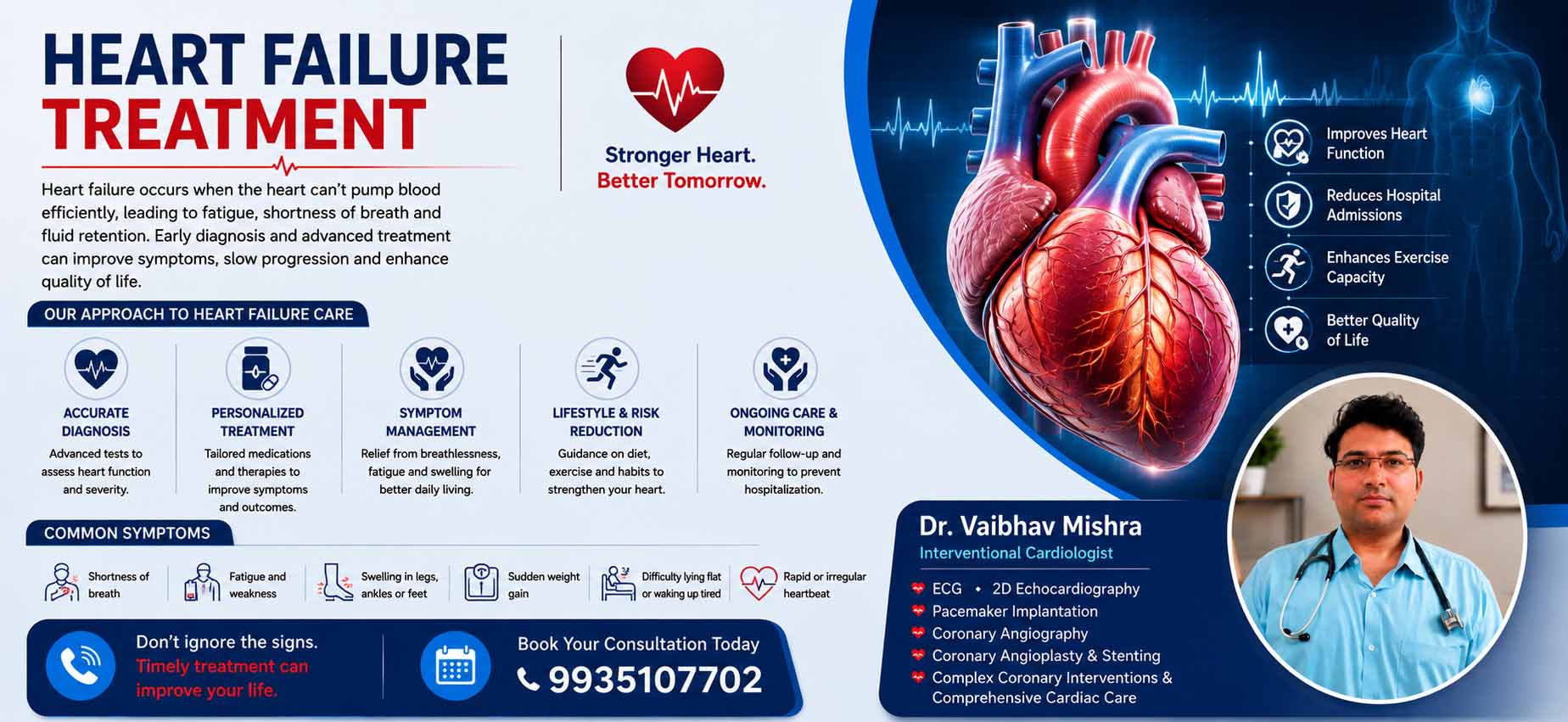
Heart Failure Treatment
Heart failure treatment focuses on improving symptoms, supporting the heart's function, reducing hospitalizations, and helping patients maintain a better quality of life. Heart failure is a complex condition, and treatment needs to be individualized according to its underlying cause, severity, heart function, symptoms, and associated medical conditions. Current international guidance emphasizes early detection, personalized management, and regular reassessment.
What Is Heart Failure?
Heart failure does not mean that the heart has stopped working. It means the heart is unable to pump or fill with blood adequately to meet the body's needs.
Patients may experience symptoms such as:
- Breathlessness, particularly during activity or while lying down
- Swelling of the legs, ankles, or feet
- Persistent tiredness or weakness
- Reduced ability to perform physical activities
- Rapid or irregular heartbeat
- Persistent cough or congestion
- Sudden weight gain due to fluid retention
Early diagnosis and appropriate treatment can help manage symptoms and reduce the risk of complications.
Comprehensive Heart Failure Evaluation
Effective treatment begins with understanding why heart failure has developed and how significantly the heart is affected.
Depending on the patient's symptoms and medical history, evaluation may include:
- Detailed medical and cardiac assessment
- Blood pressure and heart-rate evaluation
- ECG
- 2D Echocardiography
- Blood investigations
- Assessment of kidney function and other relevant parameters
- Evaluation for coronary artery disease
- Assessment of associated conditions such as diabetes, hypertension and atrial fibrillation
The 2026 international definition of heart failure places particular emphasis on identifying people at risk or with pre-heart-failure at an earlier stage, allowing more proactive management.
Medical Treatment for Heart Failure
Treatment depends on the type and severity of heart failure. For patients with heart failure with reduced ejection fraction (HFrEF), guideline-directed medical therapy may include several medication classes, including ARNI/ACE inhibitors/ARBs, beta blockers, mineralocorticoid receptor antagonists (MRAs), and SGLT2 inhibitors, with diuretics used when fluid retention is present.
Medicines are selected and adjusted according to the patient's blood pressure, kidney function, potassium levels, symptoms, ejection fraction, and other medical factors.
Patients should never start, stop, or change heart-failure medicines without medical guidance.
Managing Fluid Retention
Fluid accumulation can contribute to swelling, breathlessness, and sudden weight gain. When clinically appropriate, diuretics may be prescribed to help the body remove excess fluid.
Patients may also be advised to monitor their symptoms and weight regularly so that changes can be identified early.
Lifestyle & Self-Care
Heart failure management does not depend only on medicines. Patients may also benefit from appropriate lifestyle and self-care measures, including:
- Following a balanced, heart-healthy diet
- Following medical advice regarding sodium and fluid intake
- Maintaining appropriate physical activity
- Monitoring body weight as advised
- Controlling blood pressure and blood sugar
- Managing cholesterol
- Avoiding tobacco
- Taking medicines consistently
- Attending regular follow-up appointments
Guidelines emphasize patient education and self-care support so that patients can recognize worsening symptoms and seek timely medical attention.
Advanced Heart Failure Management
Some patients continue to experience significant symptoms despite optimized treatment. In advanced heart failure, specialist heart-failure assessment may be required.
Depending on the individual condition, additional options can include device-based therapies, advanced heart-failure therapies, mechanical circulatory support, transplantation evaluation, or palliative care. These treatments are considered only for appropriately selected patients after detailed evaluation.
Treating the Underlying Cause
Heart failure can have different causes, including coronary artery disease, previous heart attack, hypertension, heart-valve disease, abnormal heart rhythms, cardiomyopathies, and other cardiovascular conditions.
Identifying and treating the underlying cause is an important part of comprehensive heart-failure management. Associated conditions such as diabetes, atrial fibrillation, hypertension, coronary artery disease, anemia, and sleep disorders may also require appropriate management.
Heart Failure Treatment in Varanasi
Dr. Vaibhav Mishra, Interventional Cardiologist in Varanasi, provides comprehensive evaluation and management for patients with cardiovascular conditions, including heart failure.
His expertise includes ECG, 2D echocardiography, coronary angiography, coronary angioplasty, complex coronary interventions, pacemaker implantation, and comprehensive cardiac care.
His approach focuses on understanding the underlying cardiac condition, assessing the patient's symptoms and heart function, and developing an individualized treatment plan based on the patient's clinical needs.
When Should You Consult a Cardiologist?
If you experience persistent or worsening:
- Breathlessness
- Leg or ankle swelling
- Unusual fatigue
- Reduced exercise tolerance
- Rapid weight gain
- Difficulty breathing while lying down
- Persistent cough
- Palpitations
you should seek medical evaluation.
Sudden severe breathlessness, chest pain, fainting, or rapidly worsening symptoms may require emergency medical attention.
Take the Next Step Towards Better Heart Health
Heart failure can be a long-term condition, but appropriate treatment, regular monitoring, lifestyle measures, and timely medical care can help patients manage their condition effectively.
Disclaimer: This content is for general health education and does not replace a medical consultation, diagnosis, or individualized treatment plan. Heart failure treatment varies from patient to patient and should be determined by a qualified cardiologist.