
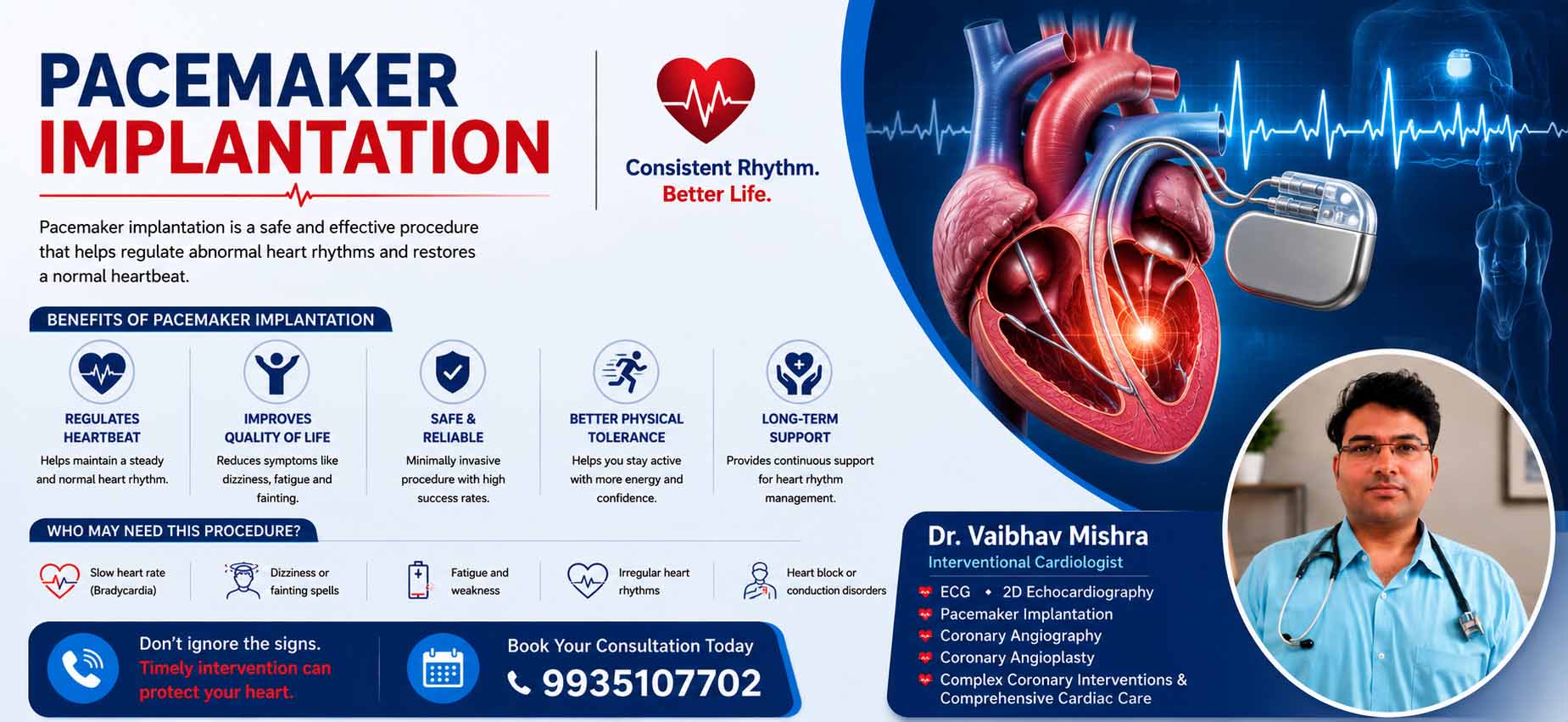
Pacemaker Implantation
Pacemaker implantation is a cardiac procedure used to help regulate the heartbeat when the heart's natural electrical system causes the heart to beat too slowly or irregularly. A pacemaker is a small electronic device that monitors the heart rhythm and delivers electrical impulses when needed to maintain an appropriate heart rate.
For patients with certain heart rhythm and conduction disorders, pacemaker therapy can help improve symptoms and support a more consistent heart rhythm. The decision to implant a pacemaker is individualized and should consider the patient's symptoms, diagnosis, overall health, and treatment goals.
What Is a Pacemaker?
A traditional pacemaker generally consists of a small pulse generator and one or more leads that connect the device to the heart. The generator is usually placed beneath the skin near the collarbone, while the leads are positioned inside the heart.
The device continuously monitors the heart's electrical activity. When the heart rate falls below the programmed level, the pacemaker can deliver small electrical impulses to help maintain the desired rhythm.
Modern pacemaker options can vary depending on the patient's condition, including single-chamber, dual-chamber, biventricular/CRT devices, and selected leadless pacemakers.
When Is Pacemaker Implantation Recommended?
A cardiologist may consider pacemaker implantation for patients with certain electrical conduction or rhythm problems, particularly when they cause symptoms or create a significant risk.
Possible indications include:
- Symptomatic slow heart rate (bradycardia)
- Certain heart conduction disorders
- Heart block
- Some abnormalities of the heart's natural pacemaker
- Recurrent dizziness or fainting related to an abnormal heart rhythm
- Certain patients with alternating slow and fast heart rhythms
Not every patient with a slow heart rate requires a pacemaker. The underlying cause, symptoms, ECG findings, and overall clinical condition need to be evaluated before deciding on implantation.
How Is Pacemaker Implantation Performed?
Pacemaker implantation is generally performed in a specialized cardiac procedure area.
1. Pre-procedure evaluation
The cardiologist evaluates the patient's symptoms, ECG, heart rhythm, medical history, medications, and other relevant investigations.
2. Local anaesthesia
The implantation area is numbed with local anaesthesia. Additional medication may be used when appropriate.
3. Device placement
For a conventional pacemaker, a small incision is made below the collarbone. Leads are guided through a vein into the appropriate heart chamber, while the pulse generator is placed beneath the skin.
4. Device testing and programming
The leads and generator are tested to ensure appropriate sensing and pacing. The pacemaker is then programmed according to the patient's individual requirements.
5. Wound closure and monitoring
The incision is closed and the patient is monitored after the procedure.
Benefits of Pacemaker Implantation
When appropriately indicated, pacemaker therapy can help:
- Maintain an appropriate heart rate
- Manage symptomatic bradycardia
- Support patients with certain conduction disorders
- Reduce symptoms related to slow heart rhythms
- Improve functional capacity in appropriately selected patients
- Provide ongoing monitoring and pacing support
The expected benefit varies according to the underlying rhythm disorder and the patient's overall health. Pacemaker implantation should therefore be based on an individualized assessment and shared decision-making between the patient and healthcare team.
Is Pacemaker Implantation Safe?
Pacemaker implantation is a commonly performed cardiac procedure, but like any invasive treatment, it carries potential risks.
Possible complications may include:
- Bleeding or bruising
- Infection
- Blood-vessel injury
- Lead displacement or malfunction
- Pneumothorax
- Cardiac perforation or tamponade
- Device-related complications
The individual risk depends on the patient's age, medical conditions, type of device, anatomy, and other factors. Your cardiologist should discuss the expected benefits and potential risks before the procedure.
Recovery After Pacemaker Implantation
Recovery varies depending on the patient's health and the type of pacemaker procedure performed.
During the initial recovery period, patients are generally advised to protect the implantation site and follow their cardiologist's instructions regarding arm movement, lifting, exercise, and other activities. The American Heart Association advises avoiding heavy lifting, pushing, pulling, or twisting during the early recovery period and following the treating team's specific instructions.
Your doctor will tell you when you can gradually return to normal activities.
Living With a Pacemaker
Most patients can return to many normal daily activities after recovery. However, regular device follow-up is important.
Pacemaker checks help the healthcare team assess:
- Battery status
- Lead function
- Device settings
- Heart rhythm
- Whether programming adjustments are needed
The American Heart Association notes that pacemakers are commonly checked periodically, often every six months to one year, depending on the patient's situation and device.
Patients should also inform doctors, dentists, and other healthcare professionals that they have a pacemaker before undergoing procedures. Certain medical procedures and sources of strong electromagnetic interference may require special precautions.
Pacemaker Battery Life
Pacemaker batteries do not last indefinitely. Battery longevity depends on the type of device and how much pacing it provides. The American Heart Association notes that pacemaker batteries commonly last around 10–15 years, although individual device life can vary.
Regular follow-up allows the device team to identify declining battery capacity before the battery becomes depleted.
Pacemaker Implantation in Varanasi
Dr. Vaibhav Mishra, Interventional Cardiologist in Varanasi, has experience in cardiac rhythm management and pacemaker procedures. His clinical expertise includes pacemaker implantation, temporary pacemaker implantation, ECG, 2D echocardiography, coronary angiography, coronary angioplasty, and comprehensive cardiac care.
With experience of more than 200 pacemaker procedures, Dr. Mishra focuses on careful evaluation, appropriate device selection, safe procedural care, and continued follow-up according to the patient's individual cardiac condition.
When Should You Consult a Cardiologist?
If you experience unexplained:
- Slow heartbeat
- Dizziness or lightheadedness
- Recurrent fainting
- Unusual weakness or fatigue
- Breathlessness
- Reduced exercise tolerance
- Episodes of irregular heartbeat
a cardiac evaluation may be appropriate.
A cardiologist can assess your symptoms and perform appropriate investigations, such as an ECG or rhythm monitoring, to determine whether a pacemaker or another treatment may be required.
Take the Next Step Toward Better Heart Rhythm Care
If you or a family member has been diagnosed with a heart rhythm or conduction problem, timely evaluation can help determine the most appropriate treatment.
Disclaimer: This content is intended for general health education and does not replace an individual medical consultation. Pacemaker implantation should only be performed when recommended after appropriate evaluation by a qualified cardiologist.