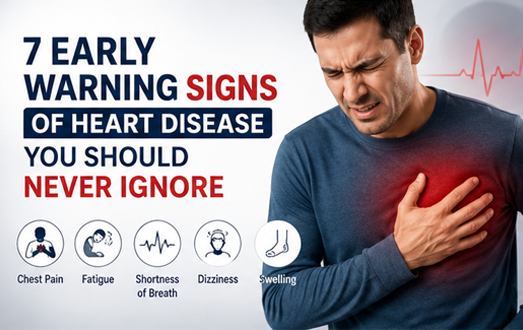
7 Early Warning Signs of Heart Disease You Should Never Ignore
Heart disease can develop gradually, and its early symptoms are sometimes easy to dismiss as tiredness, acidity, stress, or a normal part of getting older. However, certain symptoms may indicate that your heart is under stress or that blood flow to the heart is being affected.
Recognizing these warning signs early can help you seek appropriate medical attention before a potentially serious cardiac problem becomes an emergency.
Dr. Vaibhav Mishra, an experienced Interventional Cardiologist, emphasizes the importance of understanding your symptoms and getting timely cardiac evaluation when something does not feel right.
1. Chest Pain, Pressure or Discomfort
Chest discomfort is one of the most important warning signs of a possible heart problem.
It may feel like:
- Pressure or heaviness in the chest
- Tightness or squeezing
- Burning or discomfort
- A feeling of fullness in the chest
- Pain that comes and goes
Heart-related chest discomfort does not always feel like severe pain. It may also occur during physical activity or emotional stress and improve with rest.
Importantly, chest discomfort may extend beyond the chest to the shoulders, arms, neck, back, jaw, or upper abdomen.
Do not ignore new, unexplained, persistent, or severe chest discomfort.
2. Shortness of Breath
Feeling unusually breathless during routine activities, walking, climbing stairs, or even while resting may require medical evaluation.
Shortness of breath can occur with or without chest discomfort and may be associated with several cardiac conditions, including problems affecting the heart's ability to pump blood effectively.
If breathlessness is sudden, severe, or accompanied by chest discomfort, sweating, dizziness, or other concerning symptoms, seek emergency medical attention immediately.
3. Pain or Discomfort in the Arm, Shoulder, Jaw, Neck or Back
Heart-related discomfort does not necessarily remain in the chest.
Some people may experience pain, pressure, or discomfort in:
- One or both arms
- Shoulders
- Neck
- Jaw
- Back
- Upper abdomen
If this type of discomfort is new or occurs together with other warning signs, it should not be dismissed as a simple muscle problem without appropriate evaluation.
4. Unusual Fatigue or Weakness
Feeling unusually tired despite adequate rest can sometimes be a sign that something needs attention.
Extreme or unexplained fatigue may accompany a serious cardiac event. Some people, particularly women, may experience less typical symptoms such as unusual tiredness, weakness, nausea, or shortness of breath.
If your energy levels have changed significantly without an obvious reason—especially when the fatigue occurs with breathlessness, chest discomfort, dizziness, or reduced exercise tolerance—consider speaking with a doctor.
5. Dizziness, Lightheadedness or Fainting
Feeling dizzy, lightheaded, or close to fainting can have many possible causes. However, when these symptoms are sudden or occur with chest discomfort, breathlessness, palpitations, or weakness, they may require urgent medical evaluation.
Lightheadedness or fainting can sometimes occur when the heart is not maintaining adequate blood flow or when there is an abnormal heart rhythm.
A sudden unexplained episode of fainting should not be ignored.
6. Nausea, Vomiting or Indigestion-Like Discomfort
Not every heart problem begins with obvious chest pain.
Nausea, vomiting, discomfort in the upper abdomen, or indigestion-like symptoms can accompany a heart attack. These symptoms may be particularly easy to overlook because they can resemble common digestive problems.
Women may be more likely to experience accompanying symptoms such as nausea, vomiting, back or jaw pain, and shortness of breath during an acute coronary syndrome.
If digestive symptoms are sudden, unusual, persistent, or occur together with chest discomfort, sweating, breathlessness, or dizziness, seek medical attention rather than assuming it is only acidity or indigestion.
7. Cold Sweating or Sudden Sweating
Breaking out into a cold sweat without an obvious reason can be another warning sign associated with a heart attack.
When sudden sweating occurs together with chest pressure, shortness of breath, nausea, dizziness, or pain in the arm, jaw, back, or shoulder, it should be treated seriously.
Do not wait for all symptoms to appear before seeking help.
When Should You Seek Emergency Care?
Some heart attacks begin suddenly, while others develop gradually with mild or intermittent symptoms. The American Heart Association recommends acting quickly when symptoms suggest an acute coronary syndrome.
Seek emergency medical help immediately if you experience symptoms such as:
- New or persistent chest pressure or discomfort
- Severe or sudden shortness of breath
- Chest discomfort accompanied by sweating
- Chest discomfort with nausea or vomiting
- Pain spreading to the arm, shoulder, jaw, neck, or back
- Sudden dizziness, fainting, or severe weakness
- Multiple symptoms occurring together
Do not drive yourself if you are experiencing potentially serious heart-attack symptoms. Use your local emergency medical service or have someone help you reach emergency medical care.
Why Early Cardiac Evaluation Matters
Many symptoms associated with heart disease can also occur with non-cardiac conditions. For example, chest discomfort may have several possible causes. This is why it is important not to self-diagnose.
A cardiologist can assess your symptoms along with your medical history and cardiovascular risk factors and determine whether further evaluation is appropriate.
Depending on the situation, cardiac assessment may include tests such as:
- ECG
- Blood pressure evaluation
- Blood tests
- 2D Echocardiography
- Exercise or other cardiac testing when appropriate
- Additional cardiac imaging or investigations based on clinical assessment
The appropriate tests depend on the individual's symptoms, risk profile, and clinical findings.
Who Should Pay Particular Attention to Heart Warning Signs?
Everyone should take concerning cardiac symptoms seriously, but cardiovascular risk can be higher in people with factors such as:
- High blood pressure
- Diabetes
- High cholesterol
- Smoking or tobacco use
- Obesity
- Physical inactivity
- Family history of heart disease
- Previous heart disease
- Increasing age
Women can also experience heart-related symptoms that are less obvious than the classic picture of severe chest pain. Shortness of breath, nausea, back or jaw discomfort, unusual fatigue, and dizziness can accompany acute coronary syndrome.
Don't Mistake Heart Symptoms for Acidity or Stress
Chest discomfort and other symptoms are sometimes attributed to gas, acidity, anxiety, tiredness, or stress. While these conditions can certainly cause similar symptoms, it is not possible to determine the cause reliably based on symptoms alone.
When symptoms are new, unexplained, severe, persistent, or associated with other warning signs, medical evaluation is the safer approach.
Take Your Heart Health Seriously
Recognizing the warning signs of heart disease can help you make an informed decision about when to seek medical care. Chest discomfort, breathlessness, unusual fatigue, dizziness, nausea, sweating, and pain in the upper body should not automatically be dismissed—particularly when several symptoms occur together.
Dr. Vaibhav Mishra is an Interventional Cardiologist in Varanasi with expertise in coronary angiography, angioplasty, complex coronary interventions, pacemaker implantation, ECG, 2D echocardiography, and comprehensive cardiac care.
If you are experiencing recurring or unexplained cardiac symptoms, consult a qualified cardiologist for appropriate evaluation.
Conclusion
Your heart often gives you signals when something is wrong. Learning to recognize these signs can help you seek timely medical attention.
Never ignore sudden or concerning chest discomfort, difficulty breathing, fainting, or symptoms that may indicate a heart attack. When in doubt, seek urgent medical care.
Book a Cardiology Consultation in Varanasi
For comprehensive heart evaluation and personalized cardiac care, schedule a consultation with Dr. Vaibhav Mishra, Interventional Cardiologist in Varanasi.
Disclaimer: This article is intended for general health education and does not replace professional medical diagnosis or treatment. If you are experiencing symptoms that could indicate a heart attack or other medical emergency, seek emergency medical care immediately.